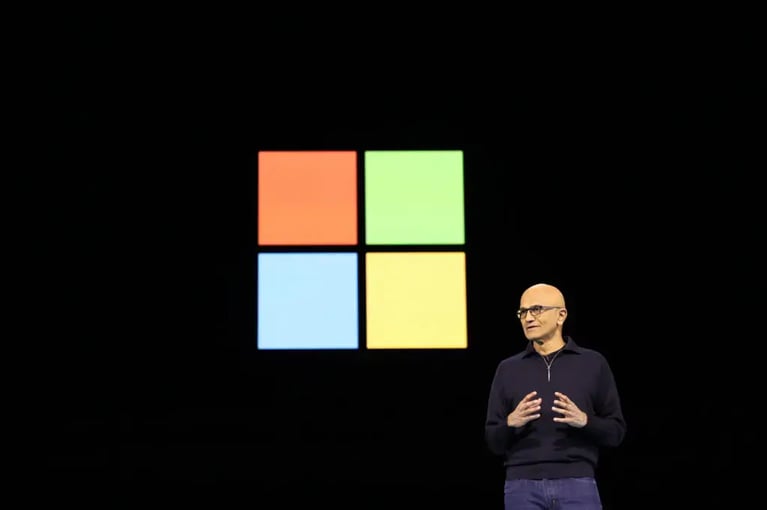


Microsoft Ignite is a significant week for IT and security leaders. This year’s announcements highlighted Microsoft’s focus on how AI could shape the way organisations work, alongside the context, governance and security needed to manage that change.
After attending Microsoft Ignite in San Francisco, CyberOne’s Ben Harding and Luke Elston joined our latest webinar to discuss the announcements most relevant to security and IT leaders. They explored Microsoft IQ, Agent 365, the Integrated Security Operations Center (ISOC) and Microsoft Perception, and what these developments could mean for organisations.
A common direction emerged: AI is moving closer to the centre of business operations. The challenge for leaders is to redesign work around AI while maintaining control of data, agents and security.
AI Is Moving From Productivity Tool to Operating Model
Much of the first phase of enterprise AI adoption has focused on individual productivity. Summarising meetings, drafting emails, searching documents and creating content can reduce everyday friction. Microsoft’s Ignite announcements point towards a broader role for AI across business processes.
Microsoft described Copilot as an ‘operating system for work’, bringing people, agents and organisational context together. Copilot Workspaces gives teams and Copilot a shared place to work on ongoing objectives, while Autopilot is designed to carry out recurring work and continue projects without requiring a new prompt at every step. Both are rolling out through Microsoft’s Frontier programme.
These developments shift the question for business leaders. Alongside asking how AI can help employees work more efficiently, organisations can examine which processes could be redesigned around the work people and agents can do together.
As Ben explained during the webinar, the strategic shift is from prompting AI to delegating defined business processes to it. The greatest opportunity may come from rethinking work rather than making each existing activity slightly faster.
The Bigger Opportunity Is Rethinking the Process
Luke described the difference between applying AI to existing tasks and reconsidering how a process should work:
Adding AI to an inefficient process can make individual tasks faster while leaving the underlying process unchanged. An AI-first approach starts with the intended business outcome, the decisions needed to reach it and the organisational knowledge required along the way. It then considers where people and agents should contribute. That is where Microsoft IQ becomes relevant.
Microsoft IQ Makes Enterprise Context Part of the AI Strategy
AI agents need context as well as capable models. Microsoft describes Microsoft IQ as an enterprise context management platform that brings together Work IQ, Fabric IQ, Foundry IQ and Web IQ, alongside reusable business plugins, skills, tools and agents. Microsoft says the platform is generally available and built on products customers already use.
During the webinar, Luke described the practical value of organisational context. Emails, SharePoint content, conversations and security telemetry can all contain information about how an organisation operates. Bringing relevant information into AI-enabled processes could help agents work with a better understanding of the business.
That opportunity also brings responsibility. Agents need the context required for an approved purpose, with access governed by appropriate permissions. Giving an agent broad access simply because it could make a task easier can increase exposure.
Microsoft’s Ignite announcements connect intelligence with trust. As organisations make more context available to agents, identity, data protection and governance become central to managing that access. Microsoft’s Ignite 2026 Book of News provides further detail on Microsoft IQ, Agent 365 and the other developments covered here.
Agent 365 Brings Governance & Business Accountability Together
As organisations deploy more agents, they need to understand how those agents are managed and what value they provide. Microsoft positions Agent 365 as a control plane for the agent estate, with capabilities for governance, identity, security and management.
Microsoft also introduced Agent 365 Business Analytics through the Frontier programme. The service is designed to help business leaders examine AI spending, adoption and outcomes, moving the discussion beyond usage alone.
That creates a shared responsibility across business and technology teams. Security leaders need to understand what an agent can access and do. IT teams need visibility of ownership and lifecycle, while finance and business leaders need insight into cost and value.
For each agent, organisations should be able to identify its owner, permissions, authorised actions and cost. They should also assess whether people are using its output and whether it contributes to the intended business outcome. AI governance is becoming an operational and commercial discipline as well as a technical one.
For a deeper look at the operational questions this creates, read Microsoft Ignite 2026 Put AI Agents to Work. 2027 Will Test How We Operate Them.
ISOC Points Towards a New Model for Security Operations
Microsoft’s security announcements also point towards closer integration in security operations. A major topic in the webinar was Microsoft’s Integrated Security Operations Center, or ISOC, in Microsoft Defender.
Microsoft says ISOC brings SIEM and threat protection together to give people and agents a shared foundation for seeing, understanding and acting across an environment. Its core capabilities are generally available. The full breadth of SIEM capabilities and 90 days of included Defender data retention are in preview, according to Microsoft.
The value of this direction will depend on how well organisations connect signals, threat intelligence, context and response across their security environments. That integration can help teams investigate activity and act on it with a broader view of what is happening.
For organisations reviewing this direction, CyberOne’s guide to how Microsoft Defender XDR, Sentinel and Perception fit together explores the role each capability plays within a connected security model.
Microsoft Perception Shows What an Agentic SOC Could Look Like
Microsoft Perception is now generally available. It uses specialised agents and playbooks to coordinate security tasks across red, blue and green team roles.
Red team agents look for weaknesses from an attacker’s perspective. Blue team agents support alert triage, investigation and threat detection, while green team agents help teams prioritise security weaknesses. Playbooks coordinate the agents’ work across broader security tasks.
This approach reflects the need to handle security activity at greater speed and scale. Microsoft’s 2026 Digital Defense Report describes AI as compressing attack timelines while giving defenders opportunities to accelerate discovery, analysis, prioritisation and response. The NCSC’s assessment of AI’s impact on the cyber threat similarly assesses that AI is highly likely to increase the speed, scale and efficiency of existing attack methodologies while human operators remain important for directing, validating and adapting AI-supported activity.
Security teams need to improve response speed while retaining oversight of consequential decisions. Organisations should define which actions agents can take, which require human approval and how agent activity will be monitored.
For CyberOne, this direction complements the agentic capabilities within our managed security services. Microsoft’s native capabilities can contribute to the wider security environment, while CyberOne’s role is to bring expertise and managed operations to their implementation. Confirm the specific service claims and wording with the relevant CyberOne owner before publication.
Agents Are Becoming Part of the Enterprise Estate
The implications extend beyond the SOC. As agents receive identities, access to data and the ability to interact with business systems, organisations need to manage them as part of the enterprise estate.
Ben highlighted this shift at the end of the webinar:
Luke’s point is about redesigning business processes around AI. Ben’s is about managing agents once they become participants in those processes. Those agents need clear ownership, appropriate identities and permissions, and observable activity.
Resilience planning should account for what happens if an agent is compromised, behaves unexpectedly or becomes unavailable. This extends planning beyond human users and traditional applications.
Where Should Organisations Start?
Organisations do not need to adopt every announcement at once. For those exploring AI-enabled transformation, a useful first step is to identify processes where AI could change how work gets done, rather than simply speed up an existing workflow.
Look for fragmented knowledge, repeated manual handling and decisions that rely on information scattered across systems. Microsoft IQ provides one option for exploring how governed enterprise context could support those processes.
Security teams can assess how their Microsoft Sentinel and Defender environments align with Microsoft’s ISOC direction. They can also consider where agentic capabilities such as Perception might support investigation, prioritisation and response, checking availability and licensing requirements as part of that assessment.
For a practical next step, What Should Security Teams Do After Microsoft Ignite 2026? sets out a framework for deciding which announcements to act on now, prepare for next or continue to monitor.
Governance should be part of the early design. Establishing ownership, identity, permissions and oversight while the agent estate is manageable can make those controls easier to maintain as adoption grows.
Intelligence Has to Develop Alongside Trust
Ignite 2026 presented an architecture for organisations where people and agents increasingly work together. Microsoft IQ provides enterprise context, Agent 365 supports agent governance and visibility, ISOC brings security capabilities together, and Microsoft Perception applies coordinated agents to security tasks.
The organisations most likely to benefit will be those that connect a clear business objective to trusted context, a governed agent, a measurable outcome and resilient security. That is the broader message from Ignite: intelligence has to develop alongside trust.
CyberOne can help organisations assess what Microsoft’s latest AI and security developments mean for their environments, from Microsoft IQ and Agent 365 to ISOC, Microsoft Perception and the wider Microsoft security platform. Our AI-augmented MXDR service combines Microsoft security technology with CyberOne’s 24×7 managed security operations to help organisations strengthen detection, response and cyber resilience.
Ready to Turn Microsoft Ignite’s Announcements Into Action?
From AI agents and enterprise context to integrated security operations, the next step is understanding which developments matter for your organisation and what needs to be in place to adopt them securely. CyberOne can help you assess your Microsoft environment, prioritise the right opportunities and build a practical roadmap around your business and security priorities.