

%20and%20Why%20Does%20It%20Matter.png?width=1024&name=What%20Is%20Data%20Security%20Posture%20Management%20(DSPM)%20and%20Why%20Does%20It%20Matter.png)

TL;DR: Data Security Posture Management (DSPM) gives organisations continuous visibility of sensitive data across cloud, SaaS and AI environments. By showing where data sits, who can access it and how it is used, DSPM helps reduce exposure, strengthen governance and support compliance. When combined with Microsoft Purview, organisations can automate discovery, classification and protection at scale, creating the secure foundations needed for confident AI adoption.
Organisations now hold more data than ever before. Customer records, financial information, intellectual property and operational insights all drive innovation, decision-making and, increasingly, AI initiatives.
But as data volumes grow, visibility often declines. Sensitive information now sits across Microsoft 365, cloud platforms, SaaS applications, data lakes and AI tools. Many organisations cannot answer basic questions: Where is our sensitive data? Who can access it? Is it properly protected?
This is where Data Security Posture Management (DSPM) makes a measurable difference.
DSPM gives security and compliance teams continuous visibility of sensitive data, so they can discover, classify, govern and protect information before it becomes a business risk. As organisations adopt AI, face more regulation and expand their cloud footprint, DSPM is now a core part of building data security maturity.
What Is Data Security Posture Management (DSPM)?
Data Security Posture Management (DSPM) is a security approach that continuously discovers, analyses and monitors sensitive data across your digital estate.
Unlike traditional security tools that focus on networks or infrastructure, DSPM focuses on the data itself. It shows where sensitive information resides, who can access it and how it is used.
A DSPM solution typically performs several core functions:
- Continuous data discovery across cloud, SaaS and on-premises environments
- Automated data classification and mapping
- Access and permissions monitoring
- Data risk assessment and prioritisation
- Governance policy enforcement
- Ongoing posture monitoring and reporting
The goal is clear: give organisations the insight needed to identify and address risks before they lead to breaches, data loss or compliance failures.
For example, even with well-configured cloud infrastructure, organisations can still expose sensitive customer information through excessive permissions, unmanaged data or poorly governed collaboration tools. DSPM uncovers and addresses these hidden risks.
Why DSPM Matters in Modern Organisations
The way organisations create, share and use data has fundamentally changed.
Data no longer sits in a single datacentre behind a traditional security perimeter. It now moves between employees, partners, cloud applications and AI tools.
Today, sensitive information may exist across:
- Microsoft 365 environments
- Multi-cloud platforms
- SaaS applications
- Collaboration tools
- Data warehouses and lakes
- AI-powered productivity tools
This flexibility drives productivity and innovation, but it also creates new governance challenges.
Without comprehensive data visibility, organisations struggle to identify:
- Overexposed sensitive information
- Excessive user permissions
- Unused data repositories
- Regulatory compliance risks
- Oversharing risks associated with AI systems
The consequences are significant. Data breaches, regulatory penalties, reputational damage and operational disruption often result from not knowing where sensitive information exists or how it is accessed.
This is why DSPM is now a strategic priority for security leaders. By providing continuous visibility of sensitive information, DSPM helps organisations move from reactive data protection to proactive risk management.
How DSPM Discovers and Classifies Sensitive Data Across Multi-Cloud Environments
A major challenge for organisations is understanding the volume and variety of data spread across different environments.
A DSPM solution continuously scans and analyses locations where data is stored, including:
- Cloud storage services
- Databases
- Microsoft 365 repositories
- SaaS applications
- File shares
- Data lakes
Continuous discovery helps organisations maintain an accurate inventory of their data assets.
But discovery alone is not enough.
DSPM solutions also perform automated data classification and mapping. This allows organisations to identify information such as:
- Personally identifiable information (PII)
- Financial records
- Employee information
- Intellectual property
- Commercially sensitive documents
- Regulated industry data
Once data is discovered and classified, it can be mapped to business value, sensitivity and risk profile. This is where Microsoft Purview plays a critical role.
Microsoft Purview helps organisations automatically discover and classify sensitive information across their Microsoft ecosystem. Using built-in classifiers, sensitivity labels and data governance capabilities, Purview provides a unified view of data assets while helping security teams apply consistent protection policies.
Instead of relying on manual processes, organisations can automate data classification at scale. This improves operational efficiency and strengthens governance.
The result is greater visibility, less complexity and a clearer view of where data risk sits.
DSPM, Compliance and Data Governance
Effective security is not just about stopping cyber attacks. It is also about proving good governance.
Boards, regulators and auditors increasingly expect organisations to understand how sensitive information is managed throughout its lifecycle.
Regulatory frameworks such as GDPR, ISO 27001 and sector-specific compliance requirements place significant emphasis on data governance, accountability and protection.
DSPM supports these objectives by helping organisations:
- Identify regulated information
- Monitor access and usage patterns
- Detect policy violations
- Maintain data inventories
- Improve audit readiness
- Support compliance reporting
This visibility makes governance programmes more effective by giving organisations clear insight into how sensitive data is handled.
Microsoft Purview strengthens this capability through integrated governance controls, information protection, compliance management and data lifecycle management.
Instead of running separate security and compliance initiatives, organisations can align governance and protection strategies on a single platform.
This creates a more mature, sustainable approach to data security.
DSPM vs CSPM: What Is the Difference?
A question frequently asked by security leaders is whether DSPM replaces Cloud Security Posture Management (CSPM).
The answer is no.
Both are important, but they address different security challenges.
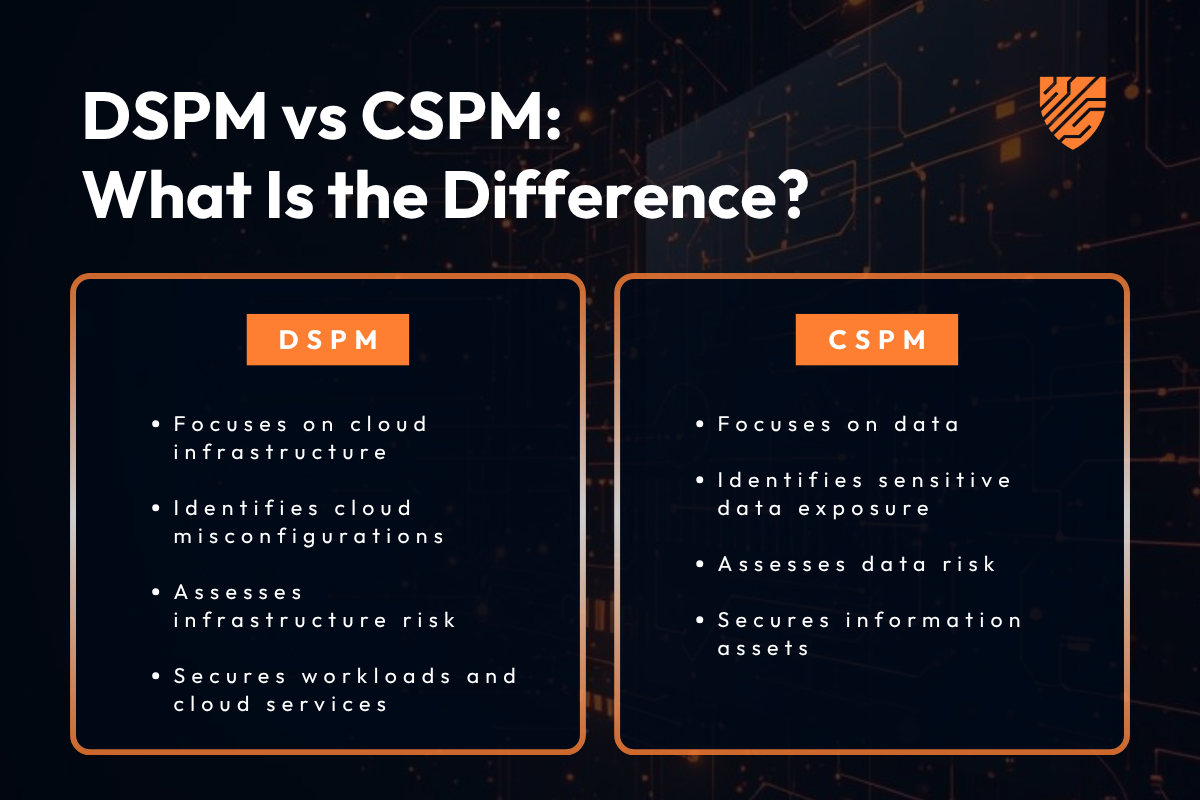
CSPM protects the environment. DSPM protects the information inside it.
An organisation may have perfectly configured cloud infrastructure but still expose customer records through poor permissions or inadequate governance controls.
Likewise, strong data controls can be undermined by insecure cloud configurations. Resilient organisations combine both approaches to achieve comprehensive cloud data security.
Key Features to Look for in a DSPM Solution
Not all DSPM platforms deliver the same capabilities. When evaluating DSPM solutions, organisations should look for several essential features.
- Automated Data Discovery and Classification - The ability to continuously identify and classify sensitive information without relying on manual intervention.
- Access Intelligence - Visibility of who has access to sensitive information and whether those permissions are appropriate.
- Data Risk Assessment - Contextual risk analysis to help prioritise remediation based on business impact.
- Continuous Monitoring - Real-time visibility of changing data risks, not just periodic assessments.
- Governance and Compliance Integration - Support for organisational policies, regulatory requirements and reporting needs.
- AI Readiness - Visibility of which data AI systems can access and whether governance controls are in place.
Microsoft Purview brings these capabilities together in a unified ecosystem, helping organisations reduce complexity and improve security and compliance outcomes.
What This Means for Your Business
Data security is no longer just a technical concern. It is a business resilience challenge.
Organisations without visibility of sensitive information face greater operational, compliance and governance risks. Those looking to adopt AI with confidence need a clear understanding of the data that will power those initiatives.
DSPM provides that visibility. By continuously discovering, classifying and assessing sensitive information, organisations gain the insight needed to make better decisions, reduce exposure and strengthen governance.
Conclusion
You cannot protect what you cannot see. Data Security Posture Management gives organisations the continuous visibility needed to discover sensitive information, assess risk and enforce governance across cloud, SaaS and AI environments.
As data estates expand and AI adoption accelerates, understanding your data security posture becomes critical. Organisations that invest in DSPM gain stronger governance, reduced risk and greater confidence to innovate securely.
To learn how your organisation can improve data visibility and prepare for secure AI adoption, download CyberOne's Data Security Buyer's Guide or arrange a 30 minute consultation with CyberOne's data security specialists.